An elevator is one of the few building systems that occupants interact with every single day.
People may never see the HVAC plant, electrical infrastructure, or water pumps hidden behind walls and ceilings. They will, however, use the elevator repeatedly throughout the life of a building.
Yet many elevator decisions are still driven primarily by purchase price, cabin finishes, or brand familiarity.
The reality is that the right elevator is not necessarily the most expensive or the most technologically advanced. It is the one that best matches the building’s purpose, expected traffic, accessibility requirements, and long-term operational goals.
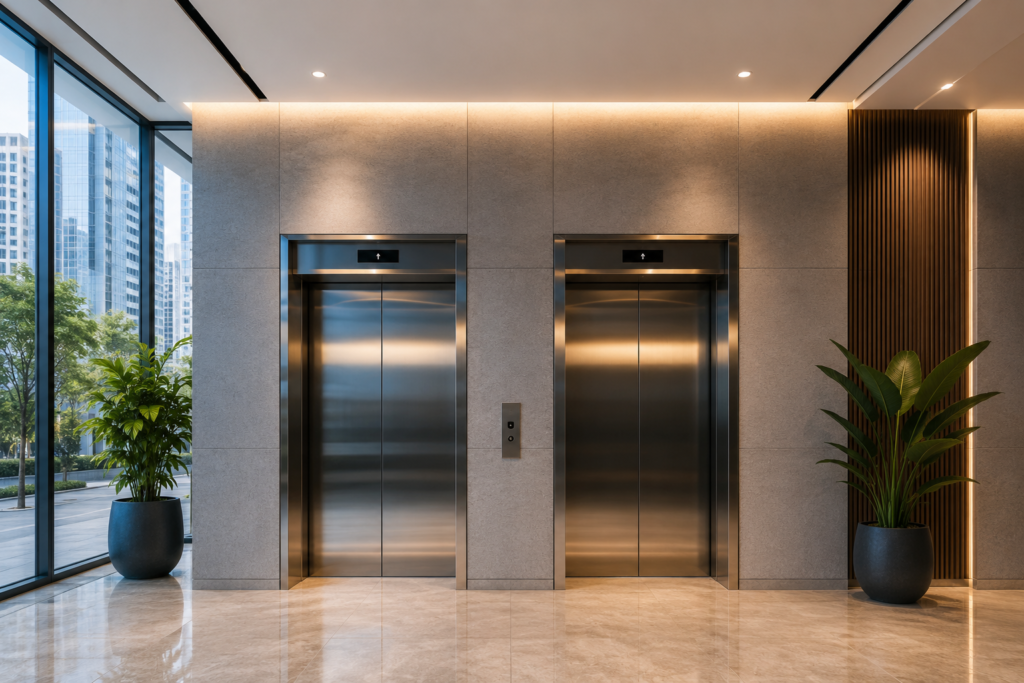
Before finalising an elevator specification, here are seven questions worth asking.
1. How Will People Actually Use the Building?
The first consideration is not elevator technology.
It is traffic.
A luxury residential tower, a hospital, a warehouse, and a corporate office may all have the same number of floors, yet their elevator requirements can be entirely different.
Understanding passenger flow, peak traffic periods, loading patterns, and expected occupancy helps determine the appropriate speed, capacity, and number of elevators required.
An elevator should be designed around building behaviour rather than building height alone.
2. Is Ride Comfort Important for This Project?
Many building owners focus on speed.
Passengers usually notice comfort.
Ride quality is influenced by several factors, including machine technology, controller performance, guide rail alignment, cabin balance, and installation precision.
A well-engineered elevator should provide:
- Smooth acceleration and deceleration
- Accurate floor levelling
- Minimal vibration
- Reduced operational noise
- Stable travel throughout the journey
In premium residential developments, hotels, healthcare facilities, and office environments, ride comfort often becomes a defining part of the user experience.
3. What Will the Elevator Cost to Operate Over the Next 20 Years?
The purchase price represents only a portion of the total investment.
Energy consumption, maintenance requirements, spare parts availability, service response capability, and modernization potential all contribute to long-term ownership costs.
Modern gearless systems, regenerative drives, LED lighting, intelligent standby functions, and efficient control systems can significantly reduce operational expenses over time.
Evaluating lifecycle value often provides a more accurate picture than comparing installation costs alone.
4. How Much Space Is Available?
Building design constraints frequently influence elevator selection.
Machine room-less systems have become increasingly popular because they reduce the need for dedicated machine room space while maintaining strong performance characteristics.
However, every project has unique structural, architectural, and operational requirements.
The most suitable solution should complement the building design rather than force design compromises.
5. Is Accessibility Being Treated as a Requirement or a Design Principle?
Accessibility is increasingly becoming a central consideration in modern architecture.
Features such as:
- Wheelchair-accessible cabins
- Braille controls
- Voice announcements
- Visual indicators
- Accessible operating heights
help create inclusive environments that serve a wider range of users.
Good accessibility planning improves the experience for everyone, not only those with mobility challenges.
6. What Happens When Something Goes Wrong?
Elevators are long-term assets that require ongoing support.
When evaluating suppliers, building owners should consider:
- Service network coverage
- Response times
- Spare parts availability
- Technical expertise
- Preventive maintenance capability
A sophisticated elevator is only as reliable as the support structure behind it.
Long-term serviceability should be part of the purchasing decision from the beginning.
7. Can the System Evolve With the Building?
Buildings change.
Occupancy levels increase. Usage patterns shift. Technology advances.
A modern elevator system should be capable of adapting through upgrades and modernization rather than requiring complete replacement.
Controllers, machines, door systems, safety components, monitoring technologies, and cabin interiors can often be upgraded to improve performance and extend service life.
Planning for future flexibility helps protect the building’s investment.
Elevators Are About More Than Moving Between Floors
The most successful elevator projects begin with the right questions rather than the right product catalogue.
A well-designed mobility solution should balance performance, comfort, safety, accessibility, energy efficiency, and long-term maintainability.
At Gilco Global, we work with developers, architects, consultants, facility managers, and building owners to help evaluate these considerations and identify solutions aligned with each project’s specific needs.
Because movement within a building is not simply a utility.
It is part of the building experience itself.
Leave a Reply