An elevator rarely fails without warning.
The breakdown that frustrates residents, disrupts tenants, or inconveniences visitors is often the final chapter of a much longer story.
Long before an elevator goes out of service, there may be subtle signs: a door that takes slightly longer to close, a cabin that doesn’t level as accurately as before, unusual vibrations during travel, or components gradually operating outside their optimal parameters.
Most users never notice these changes.
A good maintenance programme does.
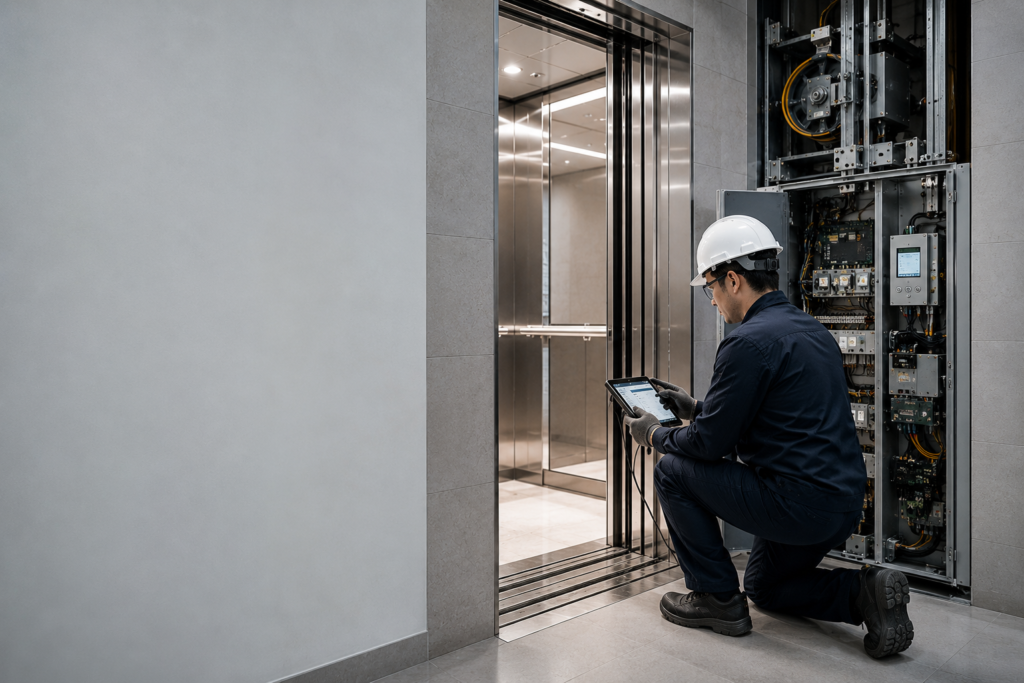
The Hidden Workhorse of Every Building
Elevators are among the most heavily used systems in modern buildings.
In residential towers, they support daily routines. In offices, they influence traffic flow and productivity. In hospitals, hotels, educational institutions, and commercial developments, they play a critical role in the overall occupant experience.
Unlike many building systems that remain hidden behind walls and ceilings, elevators interact directly with people every day.
That visibility creates an expectation: reliability.
When an elevator is unavailable, the impact is felt immediately.
Why “Working Fine” Can Be Misleading
One of the most common misconceptions about elevator maintenance is that if the equipment appears to be working normally, there is no need for concern.
In reality, wear is gradual.
Door mechanisms experience thousands of operating cycles.
Safety components require periodic testing.
Electrical systems are exposed to fluctuating conditions.
Mechanical parts experience natural wear over time.
The absence of a breakdown does not necessarily indicate the absence of risk.
This is why preventive maintenance remains one of the most important aspects of elevator ownership.
Maintenance Is About Prevention, Not Repair
Many people associate maintenance with fixing faults after they occur.
Professional maintenance takes a different approach.
Its purpose is to identify and address potential issues before they affect building operations.
A structured maintenance programme may include:
- Safety inspections
- Door system performance checks
- Ride quality evaluations
- Controller diagnostics
- Levelling accuracy assessments
- Emergency rescue device testing
- Component wear inspections
- Operational performance reviews
The objective is simple: reduce unexpected downtime while maintaining safe and reliable operation.
Modern Elevators Require More Than Mechanical Expertise
Today’s elevators are sophisticated systems combining mechanical, electrical, electronic, and software-based technologies.
Modern installations may include:
- Gearless PMSM machines
- VVVF drive systems
- Intelligent controllers
- Infrared curtain door protection
- Automatic Rescue Devices (ARD)
- Energy-saving features
- Remote monitoring capabilities
Maintaining these systems requires more than routine servicing.
It requires ongoing technical knowledge, structured inspection procedures, and an understanding of how individual components interact within the larger system.
What Defines a High-Quality AMC?
Not all Annual Maintenance Contracts are the same.
While service frequency is important, the quality of maintenance often depends on what happens during each visit.
A comprehensive maintenance programme should provide:
- Preventive maintenance schedules
- Detailed inspection procedures
- Safety testing and compliance checks
- Technical reporting
- Breakdown support
- Performance monitoring
- Modernization recommendations when required
- Long-term asset planning
A well-managed AMC should help building owners make informed decisions about both immediate maintenance needs and future upgrades.
Looking Beyond Breakdowns
The most successful maintenance programmes are not measured solely by how quickly they respond to problems.
They are measured by how effectively they prevent them.
Consistent maintenance can contribute to:
- Improved equipment reliability
- Reduced downtime
- Better ride quality
- Enhanced passenger safety
- Longer equipment life
- Lower lifecycle costs
Over time, these benefits often outweigh the cost of reactive repairs and emergency interventions.
The Value of Lifecycle Thinking
Elevators are long-term assets.
Their performance depends not only on installation quality but also on how they are maintained, monitored, and upgraded throughout their operational life.
As buildings evolve, maintenance programmes should evolve as well.
Regular assessments can help identify opportunities for:
- Safety enhancements
- Energy-efficiency improvements
- Modernization projects
- Component upgrades
- Improved accessibility
A proactive approach allows building owners to maximise value while maintaining reliability for occupants.
Reliable Mobility Doesn’t Happen by Accident
The best elevator journeys are often the ones nobody notices.
The doors open smoothly.
The ride feels comfortable.
The cabin levels accurately.
The system performs as expected.
Day after day.
Year after year.
At Gilco Global, we believe maintenance is not simply about responding to breakdowns. It is about protecting a building’s mobility infrastructure through preventive care, technical expertise, safety-focused practices, and long-term lifecycle support.
Because reliable mobility is not achieved through quick fixes.
It is built through consistency, attention to detail, and a commitment to keeping people moving safely.
Leave a Reply