×
Menu

Gilco Blog

Smart Mobility Solutions

Home

Gilco Global

What Happens to an Elevator When an Earthquake Strikes?

By Gilco GlobalJuly 22, 20260

Seismic sensors, emergency stopping, ARDs and the engineering that protects passengers when a building begins to shake.

At 5:46:52 on the morning of 17 January 1995, the ground beneath Kobe, Japan, moved with devastating force. Buildings swayed. Roads fractured. Electrical systems failed. Across the city, ordinary routines were interrupted in seconds. The United States Geological Survey records the earthquake as occurring near Kobe at precisely that time.

Inside the vertical spaces of the city, another story was unfolding—one largely hidden from view.

Lift cars hung between floors. Counterweights moved inside shafts. Steel guide rails, suspension ropes, landing doors, controllers and electrical systems were all being subjected to forces they did not encounter during an ordinary journey.

For anyone standing inside a lift, the questions would have been immediate:

Will the lift fall?

Can it tell that an earthquake has begun?

Will it stop at the next floor?

What happens if the electricity fails?

And who decides when it is safe to use the lift again?

The reassuring answer is that modern elevators are protected by several layers of engineering. The more important answer, however, is that earthquake safety depends on much more than a single device.

It begins with the design of the lift and the building. It continues through installation, commissioning, maintenance and emergency planning. And after an earthquake, it depends on something technology cannot replace: a careful inspection by qualified professionals.

A Lift Is Not Simply a Box Hanging from a Cable

Popular films have given us a dramatic image of an elevator: one cable snaps, the car plunges and passengers fall through the shaft.

That is not how a modern traction elevator is constructed.

The lift car is typically suspended by multiple steel ropes or engineered belts and balanced by a counterweight. Both the car and the counterweight travel along rigid guide rails fixed to the building. The drive machine controls movement, while the machine brake holds the car when it stops.

An overspeed governor continuously monitors car speed. If the car exceeds a defined limit, the governor can activate the safety gear, causing the car to grip its guide rails.

These systems address vertical movement. An earthquake introduces a different challenge: the building and lift equipment may also move laterally.

That sideways motion can affect:

  • Guide rails and their brackets
  • The car and counterweight
  • Suspension ropes, governor ropes and travelling cables
  • Landing doors and interlocks
  • Machinery, controllers and electrical connections
  • Buffers, switches and other equipment in the lift pit

The danger, therefore, is not simply that “the cable may break.” The larger engineering concern is that components may become displaced, misaligned or damaged while the building is moving.

Historical earthquake investigations have shown that elevators can sustain damage even when a building appears relatively intact. FEMA’s earthquake-mitigation guidance consequently asks building owners to examine the anchorage of guide rails, cars, counterweights, cables, machinery and controls—and whether an appropriate seismic switch is installed. FEMA’s elevator and escalator earthquake checklist

Can an Elevator Detect an Earthquake?

Some can. Not all do.

A lift designed for seismic operation may be connected to a seismic sensor or switch. The device monitors vibration or building acceleration. When movement exceeds its configured threshold, it sends a signal to the elevator controller.

The controller may then initiate a predetermined earthquake emergency sequence. Depending on the lift, the applicable safety code and the condition detected, this may include:

  1. Cancelling normal passenger calls.
  2. Reducing speed or stopping the car.
  3. Moving the car to a permitted nearby landing, when it is safe to do so.
  4. Opening the doors to allow passengers to leave.
  5. Removing the lift from normal service until it has been checked.

Additional displacement or derailment switches may be used to identify abnormal movement of the counterweight or other equipment. If a critical safety circuit is interrupted, the controller may stop the car rather than attempt to continue to a floor.

This distinction matters: a seismic sensor does not predict an earthquake. It reacts when it detects a defined level of movement. Some advanced systems may integrate with external earthquake early-warning networks, but that capability should never be assumed in an ordinary lift.

International safety frameworks contain dedicated provisions for earthquake-related elevator equipment and emergency operation. The precise requirements depend on the jurisdiction, seismic risk and adopted code. ASME A17.1/CSA B44 identifies specific earthquake equipment and emergency-operation provisions, while India’s National Building Code guidance also recognises lifts with seismic-resistance features. BIS guide to NBC 2016

The important phrase is where provided and appropriately configured. Not every existing elevator has dedicated earthquake detection or automatic seismic operation.

What Happens to a Moving Lift When Shaking Begins?

There is no single response that applies to every elevator.

A seismically equipped lift may attempt to reach a safe landing before opening its doors and shutting down. Another lift may stop immediately because a safety circuit has opened. An older system without seismic operation may continue until the power fails, a fault is detected or the controller removes it from service.

This is why passengers should not try to predict what the lift will do.

A sudden stop does not necessarily mean the lift has failed catastrophically. It may mean the safety system has detected a condition under which continuing would be riskier than remaining stationary.

Similarly, a lift stopping between floors can be frightening, but remaining inside the car is generally safer than forcing the doors or attempting to climb out without trained assistance. The car may not be level with the landing, and the space beyond the doors may open directly into the shaft.

Use the alarm button or emergency communication system and wait for instructions. Do not attempt self-rescue.

Power Failure and Earthquake Detection Are Not the Same Thing

This is one of the most frequently misunderstood parts of elevator safety.

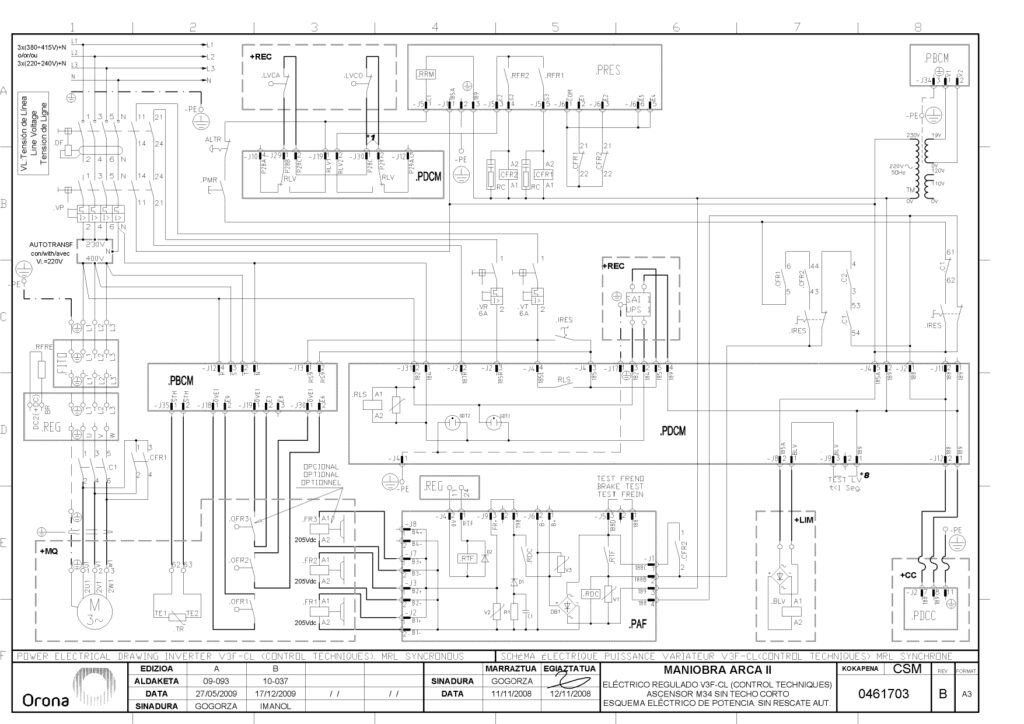
An Automatic Rescue Device, commonly called an ARD, is primarily designed to respond to a loss of normal electrical power. Using backup energy, it may move the car slowly in the most suitable direction to a nearby landing, level the car and open the doors.

An ARD is valuable, but it is not an earthquake detector.

If an earthquake damages equipment, activates a displacement switch or opens a safety circuit, the control system may prevent the lift from moving—even if backup power is available. Moving the car under those conditions could create a greater hazard.

The same principle applies to a building generator. Emergency power may be available, but that does not automatically mean every lift should resume operation. The building’s emergency plan determines which lifts receive backup power and under what conditions they may operate.

Think of the systems as performing different jobs:

  • seismic sensor responds to abnormal ground or building movement.
  • An ARD responds primarily to a mains power failure.
  • generator provides an alternative source of electrical power.
  • The elevator safety circuit decides whether movement is permitted.
  • qualified inspection determines whether the equipment may safely return to service.

No single device replaces the others.

What Should Passengers Do?

If you are outside a lift when shaking begins, do not enter it. Move away from glass and unsecured objects and follow the recognised “Drop, Cover and Hold On” response.

Do not rush towards the stairs while the building is actively shaking. Once the shaking stops, follow the building’s emergency instructions and use a designated staircase or evacuation route only when it is considered safe.

Both Indian and international disaster authorities advise against using elevators during and immediately after an earthquake. NDMA’s disaster-safety guidance recommends using stairs rather than lifts, and the CDC’s high-rise earthquake guidance gives the same warning.

If you are already inside a lift:

  • Stay calm and brace yourself against sudden movement.
  • Protect your head and neck if objects are falling.
  • If the car reaches a floor and the doors open normally, leave carefully.
  • If the car stops between floors, use the alarm or emergency communication system.
  • Do not jump inside the car.
  • Do not force the doors open.
  • Do not climb out unless trained rescue personnel instruct and assist you.

Most importantly, remember that a stationary lift car is not automatically an unsafe lift car. An intentional shutdown may be the system’s safest available response.

Why a Lift Must Be Inspected After an Earthquake

When the shaking ends, the building may look normal. The lift may even respond when someone presses the call button.

Neither is proof that it is safe.

Damage inside a shaft can be difficult to see from a landing. A rail bracket may have shifted. A counterweight guide shoe may be damaged. A rope may have moved out of its intended position. A landing-door lock may no longer align correctly. Water, dust or debris may have entered the pit or machinery area.

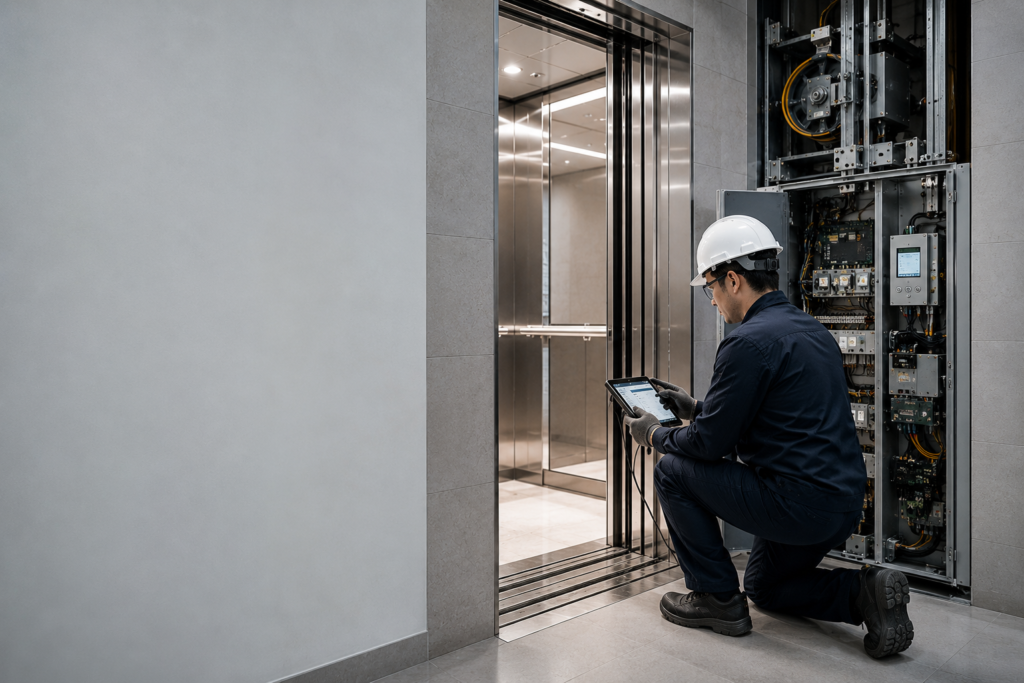
Before returning a lift to service, the building itself may first require structural clearance. A competent elevator technician should then inspect the installation in accordance with applicable codes, manufacturer instructions and local authority requirements.

The inspection may include:

  • Car and counterweight guide rails, brackets and fastenings
  • Counterweight retainers and displacement devices
  • Suspension ropes or belts and their terminations
  • Governor rope, overspeed governor and safety gear
  • Machine, brake and supporting structure
  • Landing doors, car doors and interlocks
  • Buffers, limit switches and pit equipment
  • Controllers, wiring and safety circuits
  • Emergency communication and alarm systems
  • ARD, batteries and standby-power interfaces
  • Ride quality, levelling and controlled test operation

Only after the installation has been examined and tested should normal passenger service resume. FEMA’s post-disaster guidance similarly treats building reoccupation as an evaluated decision, not an assumption based on outward appearance. FEMA post-disaster building-safety evaluation guidance

Aftershocks make this caution especially important.

Earthquake Safety Begins Before the Earthquake

The best time to think about seismic elevator safety is not while passengers are waiting inside a stopped car.

For architects, developers and building owners, earthquake readiness should be considered at the design stage. The building’s location and seismic classification, lift speed, travel height, equipment arrangement, shaft design, component anchorage and applicable regulations all influence the required solution.

For facility managers, preparedness means knowing:

  • Whether each lift has dedicated seismic detection.
  • What emergency sequence the controller is programmed to perform.
  • Which lifts are connected to standby power.
  • How the ARD behaves during a power failure.
  • Who receives an emergency or entrapment call.
  • Who is authorised to shut down or restore the lifts.
  • Which elevator service provider will conduct the post-earthquake inspection.
  • How passengers with limited mobility will be assisted if lifts are unavailable.

These details should be written into the building’s emergency plan and practised during drills. Security personnel, reception teams and facility staff should know that forcibly resetting a lift after an earthquake is not a rescue procedure.

The Most Important Safety System Is a Chain

Earthquake elevator safety is sometimes described as though one intelligent sensor will solve everything.

It will not.

Real safety comes from a chain: appropriate design, secure installation, layered protective devices, correct commissioning, preventive maintenance, reliable communication, trained building personnel and disciplined post-event inspection.

If one link is neglected, the entire response becomes weaker.

That is the hidden lesson inside every elevator shaft. During an ordinary journey, hundreds of mechanical and electrical decisions happen quietly. During an earthquake, those same systems must decide something even more important than how to keep moving.

They must know when not to.

At Gilco Global, we believe vertical mobility safety must be considered throughout the equipment lifecycle—from planning and engineering to commissioning, maintenance and emergency preparedness. Because when the ground moves, a safe response should never depend on guesswork.

T: 1800 313 333 551 · M: info@gilcoglobal.in

The Silent Warning Signs Your Elevator Is Giving You Right Now

By Gilco GlobalJuly 6, 20260

Every day, people step into elevators without thinking.

They press a button.
The doors close.
The lift moves.
A few seconds later, life continues.

That silence is the real miracle.

Because behind every smooth elevator ride is not one machine doing one job.

It is a complete safety ecosystem.

Engineering.
Installation.
Inspection.
Maintenance.
Building ownership.
Passenger behaviour.

Miss one layer, and the system becomes weaker.

Are Elevators Really Safe?

Yes.

Modern elevators are among the safest transportation systems ever engineered.

But here is the part most building owners miss:

Elevator safety is not guaranteed forever just because the equipment was installed well on day one.

Safety has to be maintained.

Most elevator incidents are not caused by dramatic, sudden failures. They usually begin much earlier with small signs that were ignored.

Slow doors.
Uneven levelling.
Unusual sounds.
Excessive vibration.
Repeated shutdowns.
Burning smells.

The elevator was already speaking.

Someone simply did not listen.

The Six Systems Quietly Protecting Every Passenger

Most passengers only see two things.

Doors opening.
The elevator moving.

But inside the system, six safety functions are constantly working together.

1. Door Sensors

Infrared light curtains detect people, luggage, wheelchairs or objects between closing doors and reopen them automatically.

2. Door Interlocks

The elevator cannot move unless doors are properly closed and locked.

3. Precision Brakes

The lift does not simply stop because the motor stops. Braking systems hold the cabin securely at every halt.

4. Speed Monitoring

Independent systems continuously verify that the elevator is moving at the correct speed.

5. Emergency Phone

If the lift stops unexpectedly, passengers can contact assistance from inside the cabin.

6. Automatic Rescue Device

During a power failure, ARD can move the elevator to the nearest floor and open the doors safely.

That is why safety is not one feature.

It is layers of protection working together.

Before You Step Into an Elevator

A safe journey starts before the doors close.

Allow passengers to exit first.
Check that the lift has arrived level with the floor.
Keep children close.
Be careful with luggage, trolleys and loose bags.
Respect the load capacity.

Capacity limits are not suggestions.

They are engineering limits.

Inside the Elevator: Small Habits Matter

Once inside, the safest behaviour is simple.

Stand clear of the doors.
Do not hold doors open with your hand, foot or bag.
Do not force doors.
Do not overcrowd the cabin.
Keep children supervised.

The door system is one of the busiest moving systems in an elevator. Repeatedly blocking it may look harmless, but it increases wear.

Escalator Safety: The Risk Is Usually Behaviour

Escalators look simple.

Step on.
Ride.
Step off.

But because escalators are always moving, small mistakes matter.

Hold the handrail.
Face forward.
Stand within the yellow lines.
Keep loose clothing away from edges.
Hold children’s hands.
Use elevators for wheelchairs, prams and large trolleys.
Step off promptly.

Most escalator incidents are preventable.

They usually come from rushing, distraction or unsuitable use.

What Happens During a Power Failure?

This is where fear often takes over.

But passengers should know one thing clearly:

An elevator cabin is not an airtight box.

If the lift stops during a power failure, remain calm.

Use the alarm or emergency communication system.
Stay inside the cabin.
Wait for trained assistance.
Do not force the doors open.
Do not try to climb out.

If the elevator has an ARD, it may automatically move to the nearest floor and open safely.

The most dangerous decision is usually panic.

Elevator Safety During Fire

This message cannot be repeated enough:

Do not use passenger elevators during a fire unless the building has specifically designated evacuation elevators and trained emergency procedures.

Use stairwells.
Follow evacuation instructions.
Do not override lift controls.
Listen to emergency personnel.

Fire changes everything — smoke, heat, power supply and emergency controls.

In a fire, the safest elevator decision is usually not to use one.

Earthquakes, Flooding and Emergencies

After an earthquake, flooding or major building event, elevators should not be casually restarted.

Even if they appear normal, hidden damage may exist.

The correct process is simple:

Incident
→ Shutdown if required
→ Professional inspection
→ Clearance
→ Safe restart

The Warning Signs Most People Ignore

This is the section every facility manager should print and keep.

Slow Doors

May indicate wear, misalignment or adjustment issues.

Uneven Levelling

A small step between the elevator and floor can become a serious trip hazard.

Unusual Sounds

Grinding, scraping, knocking or clicking should be checked.

Excessive Vibration

A smooth elevator should not shake noticeably.

Burning Smell

Electrical odours need immediate professional attention.

Repeated Shutdowns

Frequent resets are not a solution. They are a warning.

Elevators rarely fail without warning.

The earlier you respond, the safer and cheaper the solution usually is.

Preventive Maintenance Is Not an Expense. It Is Risk Control.

Many building owners think maintenance is what happens after something breaks.

That is wrong.

Maintenance is what prevents the breakdown.

A strong maintenance programme includes:

Inspection
Adjustment
Lubrication
Safety testing
Fault reporting
Next-visit planning

The best maintenance is often invisible because nothing dramatic happens.

No panic.
No shutdown.
No trapped passengers.
No reputation damage.

That is the point.

Preventive Maintenance vs Reactive Repair

Preventive MaintenanceReactive Repair
PlannedSudden
Lower riskHigher risk
Predictable costEmergency cost
Better passenger confidenceComplaints and panic
Longer equipment lifeFaster deterioration
Fewer shutdownsRepeated downtime

The cheapest elevator problem is the one prevented early.

Elevator Myths That Need to End

Myth 1: Elevators can suddenly free-fall

Modern elevators have multiple safety systems designed to prevent uncontrolled movement.

Myth 2: Jumping during a malfunction helps

It does not. Stay calm and use emergency communication.

Myth 3: Holding doors open is harmless

Repeated blocking increases wear.

Myth 4: Old elevators are automatically unsafe

Age alone does not decide safety. Maintenance, inspection and modernization do.

Myth 5: Maintenance is needed only after breakdown

That is repair, not maintenance.

What Building Owners Must Take Seriously

Passenger safety is shared.

Manufacturers design.
Technicians maintain.
Inspectors verify.
But building owners and facility managers decide whether the system is cared for properly.

Their responsibilities include:

Scheduled preventive maintenance
Periodic inspections
Prompt response to complaints
Maintenance record keeping
Modernization planning
Emergency preparedness
Testing communication systems

A building owner does not only own equipment.

They own the responsibility for every journey that equipment makes.

Practical Elevator Safety Checklist

For Passengers

✓ Let others exit first
✓ Check floor levelling
✓ Stand clear of doors
✓ Do not force doors
✓ Respect capacity
✓ Supervise children
✓ Stay calm during stoppages

For Escalator Users

✓ Hold the handrail
✓ Face forward
✓ Stand within yellow lines
✓ Secure loose clothing
✓ Hold children’s hands
✓ Step off promptly

For Building Owners

✓ Maintain service schedule
✓ Complete inspections
✓ Keep records updated
✓ Respond to warning signs
✓ Test emergency communication
✓ Plan modernization before failure

The Future of Elevator Safety

Elevator safety is becoming smarter.

Insert Pictograph 6: Future of Elevator Safety Timeline
Use existing timeline from Page 24: Preventive Maintenance → Digital Monitoring → Predictive Analytics → Connected Buildings.

The next generation of safety will be driven by:

Digital monitoring
AI-led diagnostics
Predictive maintenance
Remote troubleshooting
Touchless controls
Energy-efficient drives
Connected building systems

But technology alone will never be enough.

The safest elevator will always combine:

Thoughtful engineering.
Professional maintenance.
Responsible ownership.
Informed passenger use.

Safety Is Never an Accident

Most people judge an elevator by how quickly it arrives.

Engineers judge it differently.

They see the brakes.
The sensors.
The interlocks.
The inspections.
The maintenance records.
The small issues fixed before they become large failures.

An elevator that attracts no attention is usually doing its job exceptionally well.

Because elevator safety is not simply about moving people between floors.

It is about earning trust.

One journey at a time.

An Elevator Doesn’t Stop Suddenly. It Stops Gradually

By Gilco GlobalJune 27, 20260

An elevator rarely fails without warning.

The breakdown that frustrates residents, disrupts tenants, or inconveniences visitors is often the final chapter of a much longer story.

Long before an elevator goes out of service, there may be subtle signs: a door that takes slightly longer to close, a cabin that doesn’t level as accurately as before, unusual vibrations during travel, or components gradually operating outside their optimal parameters.

Most users never notice these changes.

A good maintenance programme does.

The Hidden Workhorse of Every Building

Elevators are among the most heavily used systems in modern buildings.

In residential towers, they support daily routines. In offices, they influence traffic flow and productivity. In hospitals, hotels, educational institutions, and commercial developments, they play a critical role in the overall occupant experience.

Unlike many building systems that remain hidden behind walls and ceilings, elevators interact directly with people every day.

That visibility creates an expectation: reliability.

When an elevator is unavailable, the impact is felt immediately.

Why “Working Fine” Can Be Misleading

One of the most common misconceptions about elevator maintenance is that if the equipment appears to be working normally, there is no need for concern.

In reality, wear is gradual.

Door mechanisms experience thousands of operating cycles.

Safety components require periodic testing.

Electrical systems are exposed to fluctuating conditions.

Mechanical parts experience natural wear over time.

The absence of a breakdown does not necessarily indicate the absence of risk.

This is why preventive maintenance remains one of the most important aspects of elevator ownership.

Maintenance Is About Prevention, Not Repair

Many people associate maintenance with fixing faults after they occur.

Professional maintenance takes a different approach.

Its purpose is to identify and address potential issues before they affect building operations.

A structured maintenance programme may include:

  • Safety inspections
  • Door system performance checks
  • Ride quality evaluations
  • Controller diagnostics
  • Levelling accuracy assessments
  • Emergency rescue device testing
  • Component wear inspections
  • Operational performance reviews

The objective is simple: reduce unexpected downtime while maintaining safe and reliable operation.

Modern Elevators Require More Than Mechanical Expertise

Today’s elevators are sophisticated systems combining mechanical, electrical, electronic, and software-based technologies.

Modern installations may include:

  • Gearless PMSM machines
  • VVVF drive systems
  • Intelligent controllers
  • Infrared curtain door protection
  • Automatic Rescue Devices (ARD)
  • Energy-saving features
  • Remote monitoring capabilities

Maintaining these systems requires more than routine servicing.

It requires ongoing technical knowledge, structured inspection procedures, and an understanding of how individual components interact within the larger system.

What Defines a High-Quality AMC?

Not all Annual Maintenance Contracts are the same.

While service frequency is important, the quality of maintenance often depends on what happens during each visit.

A comprehensive maintenance programme should provide:

  • Preventive maintenance schedules
  • Detailed inspection procedures
  • Safety testing and compliance checks
  • Technical reporting
  • Breakdown support
  • Performance monitoring
  • Modernization recommendations when required
  • Long-term asset planning

A well-managed AMC should help building owners make informed decisions about both immediate maintenance needs and future upgrades.

Looking Beyond Breakdowns

The most successful maintenance programmes are not measured solely by how quickly they respond to problems.

They are measured by how effectively they prevent them.

Consistent maintenance can contribute to:

  • Improved equipment reliability
  • Reduced downtime
  • Better ride quality
  • Enhanced passenger safety
  • Longer equipment life
  • Lower lifecycle costs

Over time, these benefits often outweigh the cost of reactive repairs and emergency interventions.

The Value of Lifecycle Thinking

Elevators are long-term assets.

Their performance depends not only on installation quality but also on how they are maintained, monitored, and upgraded throughout their operational life.

As buildings evolve, maintenance programmes should evolve as well.

Regular assessments can help identify opportunities for:

  • Safety enhancements
  • Energy-efficiency improvements
  • Modernization projects
  • Component upgrades
  • Improved accessibility

A proactive approach allows building owners to maximise value while maintaining reliability for occupants.

Reliable Mobility Doesn’t Happen by Accident

The best elevator journeys are often the ones nobody notices.

The doors open smoothly.

The ride feels comfortable.

The cabin levels accurately.

The system performs as expected.

Day after day.

Year after year.

At Gilco Global, we believe maintenance is not simply about responding to breakdowns. It is about protecting a building’s mobility infrastructure through preventive care, technical expertise, safety-focused practices, and long-term lifecycle support.

Because reliable mobility is not achieved through quick fixes.

It is built through consistency, attention to detail, and a commitment to keeping people moving safely.

Choosing an Elevator? Ask These 7 Questions First

By Gilco GlobalJune 25, 20260

An elevator is one of the few building systems that occupants interact with every single day.

People may never see the HVAC plant, electrical infrastructure, or water pumps hidden behind walls and ceilings. They will, however, use the elevator repeatedly throughout the life of a building.

Yet many elevator decisions are still driven primarily by purchase price, cabin finishes, or brand familiarity.

The reality is that the right elevator is not necessarily the most expensive or the most technologically advanced. It is the one that best matches the building’s purpose, expected traffic, accessibility requirements, and long-term operational goals.

Before finalising an elevator specification, here are seven questions worth asking.

1. How Will People Actually Use the Building?

The first consideration is not elevator technology.

It is traffic.

A luxury residential tower, a hospital, a warehouse, and a corporate office may all have the same number of floors, yet their elevator requirements can be entirely different.

Understanding passenger flow, peak traffic periods, loading patterns, and expected occupancy helps determine the appropriate speed, capacity, and number of elevators required.

An elevator should be designed around building behaviour rather than building height alone.

2. Is Ride Comfort Important for This Project?

Many building owners focus on speed.

Passengers usually notice comfort.

Ride quality is influenced by several factors, including machine technology, controller performance, guide rail alignment, cabin balance, and installation precision.

A well-engineered elevator should provide:

  • Smooth acceleration and deceleration
  • Accurate floor levelling
  • Minimal vibration
  • Reduced operational noise
  • Stable travel throughout the journey

In premium residential developments, hotels, healthcare facilities, and office environments, ride comfort often becomes a defining part of the user experience.

3. What Will the Elevator Cost to Operate Over the Next 20 Years?

The purchase price represents only a portion of the total investment.

Energy consumption, maintenance requirements, spare parts availability, service response capability, and modernization potential all contribute to long-term ownership costs.

Modern gearless systems, regenerative drives, LED lighting, intelligent standby functions, and efficient control systems can significantly reduce operational expenses over time.

Evaluating lifecycle value often provides a more accurate picture than comparing installation costs alone.

4. How Much Space Is Available?

Building design constraints frequently influence elevator selection.

Machine room-less systems have become increasingly popular because they reduce the need for dedicated machine room space while maintaining strong performance characteristics.

However, every project has unique structural, architectural, and operational requirements.

The most suitable solution should complement the building design rather than force design compromises.

5. Is Accessibility Being Treated as a Requirement or a Design Principle?

Accessibility is increasingly becoming a central consideration in modern architecture.

Features such as:

  • Wheelchair-accessible cabins
  • Braille controls
  • Voice announcements
  • Visual indicators
  • Accessible operating heights

help create inclusive environments that serve a wider range of users.

Good accessibility planning improves the experience for everyone, not only those with mobility challenges.

6. What Happens When Something Goes Wrong?

Elevators are long-term assets that require ongoing support.

When evaluating suppliers, building owners should consider:

  • Service network coverage
  • Response times
  • Spare parts availability
  • Technical expertise
  • Preventive maintenance capability

A sophisticated elevator is only as reliable as the support structure behind it.

Long-term serviceability should be part of the purchasing decision from the beginning.

7. Can the System Evolve With the Building?

Buildings change.

Occupancy levels increase. Usage patterns shift. Technology advances.

A modern elevator system should be capable of adapting through upgrades and modernization rather than requiring complete replacement.

Controllers, machines, door systems, safety components, monitoring technologies, and cabin interiors can often be upgraded to improve performance and extend service life.

Planning for future flexibility helps protect the building’s investment.

Elevators Are About More Than Moving Between Floors

The most successful elevator projects begin with the right questions rather than the right product catalogue.

A well-designed mobility solution should balance performance, comfort, safety, accessibility, energy efficiency, and long-term maintainability.

At Gilco Global, we work with developers, architects, consultants, facility managers, and building owners to help evaluate these considerations and identify solutions aligned with each project’s specific needs.

Because movement within a building is not simply a utility.

It is part of the building experience itself.

The Hidden Backbone of Elevator Performance

By Gilco GlobalJune 17, 20260

Understanding the Engineering Differences Between Cold Drawn and Hot Rolled Elevator Rails

1. Introduction

Guide rails are among the most critical structural components in a traction elevator system. They perform three essential functions:

  • Guide the elevator car and counterweight in a controlled vertical path
  • Provide the engagement surface for safety gear during emergency braking
  • Resist lateral forces, vibration, and bending moments under dynamic operation

The material, geometry, and manufacturing process of guide rails directly influence ride quality, safety compliance, long-term reliability, and maintenance frequency.

In elevator engineering, the comparison typically centers on cold drawn solid steel guide rails versus hot rolled steel guide rails, particularly in relation to dimensional accuracy, surface finish, mechanical behavior, and compliance with ISO 7465.

2. Manufacturing Processes

2.1 Hot Rolled Steel Guide Rails

Hot rolled steel is produced by rolling steel at temperatures above its recrystallization temperature. This allows easier shaping of large sections and reduces forming forces.

Characteristics of hot rolled steel:

  • Good ductility
  • Lower internal stress from forming
  • Rough surface finish with mill scale
  • Wider dimensional tolerances

While structurally strong, hot rolled sections lack the geometric precision and surface consistency required for direct use in precision guidance applications unless further processed.

2.2 Cold Drawn Solid Steel Guide Rails

Cold drawing begins with hot rolled steel, which is then pulled through dies at room temperature to achieve final shape and dimensions.

This process:

  • Refines the microstructure
  • Increases tensile and yield strength through strain hardening
  • Improves dimensional precision
  • Produces a smoother surface finish

Under ISO 7465, cold drawn rails are typically designated with the suffix “/A.” They are widely used in modern elevator systems due to their balance of strength, precision, and cost efficiency.

3. Dimensional Accuracy and Geometric Stability

Guide rails must comply with strict requirements for:

  • Straightness
  • Twist
  • Parallelism
  • Surface roughness
  • Cross-sectional tolerances

Cold drawn rails are manufactured with tighter tolerances compared to raw hot rolled profiles. This reduces:

  • Lateral oscillation of the car
  • Vibration transfer into the cabin
  • Alignment correction during installation

Hot rolled rails, unless subjected to straightening and machining, may exhibit geometric variation that affects ride comfort and long-term system behavior.

4. Surface Finish and Ride Quality

Surface finish plays a critical role in elevator performance. The interaction between guide rails and guide shoes or rollers determines:

  • Friction characteristics
  • Noise levels
  • Wear patterns
  • Vibration transmission

Cold drawn rails provide a smoother contact surface compared to untreated hot rolled steel. This improves:

  • Ride comfort
  • Noise control
  • Uniform wear on guide shoes
  • Stability at higher speeds

Hot rolled surfaces typically require grinding or machining before installation in passenger lifts where comfort standards are high.


5. Mechanical Properties

Cold drawing increases material strength due to strain hardening. Compared to hot rolled steel, cold drawn rails generally exhibit:

  • Higher yield strength
  • Higher tensile strength
  • Increased surface hardness

These properties improve resistance to:

  • Localized deformation
  • Surface wear
  • Minor impact stresses during installation

Hot rolled steel retains higher ductility but lower surface hardness unless further processed.

6. Speed and Application Suitability

Low-Rise and Standard-Speed Elevators

Cold drawn rails are widely used and perform effectively for standard passenger elevators. Properly finished hot rolled rails may also be used in cost-sensitive applications.

Mid-Rise and Moderate Speed Systems

Cold drawn rails are generally preferred due to better straightness and reduced vibration transmission.

High-Speed and High-Rise Elevators

In high-performance systems, machined rails (ISO 7465 /B or /BE) are often selected. Cold drawn rails may still be used depending on speed and comfort targets. Basic hot rolled rails are typically unsuitable unless fully machined.

7. Installation and Lifecycle Considerations

Installation

Cold drawn rails reduce installation correction time due to:

  • Better straightness
  • Consistent joint alignment
  • Lower need for field adjustment

Hot rolled rails may require:

  • Additional straightening
  • Surface grinding
  • Increased alignment effort

Maintenance

Rails themselves are designed to outlast guide shoes or rollers. However, surface irregularities can accelerate shoe wear and increase vibration over time.

Cold drawn rails promote:

  • Stable friction conditions
  • Predictable wear behavior
  • Reduced long-term adjustment frequency

8. Cost Considerations

Hot rolled steel typically has a lower raw material cost. However:

  • Additional finishing
  • Installation adjustments
  • Potential performance compromises

may offset the initial savings.

Cold drawn rails involve higher manufacturing cost but may reduce:

  • Installation time
  • Ride complaints
  • Long-term service intervention

In lifecycle cost analysis, cold drawn rails often provide better overall value in passenger-focused installations.

9. Comparative Summary

ParameterCold Drawn Guide RailsHot Rolled Guide Rails
Dimensional PrecisionHighModerate to Low
Surface FinishSmoothRough (unless finished)
Mechanical StrengthHigher yield and tensileStandard structural strength
Ride ComfortImprovedDependent on finishing
Installation EffortLowerHigher
Suitability for Higher SpeedsSuitable (with limits)Limited without machining
Lifecycle PerformanceStable and predictableVariable if untreated
Initial CostHigherLower

10. Conclusion

In modern elevator engineering, cold drawn solid steel guide rails represent a technically refined and performance-oriented solution. Their dimensional precision, smoother surface profile, and improved mechanical strength make them suitable for most passenger and mid-rise applications.

Hot rolled guide rails may be structurally adequate, but without further finishing they do not naturally meet the geometric and surface requirements demanded by contemporary ride comfort standards.

Where safety, precision, and passenger experience are primary considerations, cold drawn guide rails are generally the more appropriate engineering choice.

The Lift Decisions Buildings Live With for Decades

By Gilco GlobalFebruary 10, 20260

The Lift Decisions Buildings Live With for Decades

Vertical circulation rarely fails loudly.

More often, it erodes buildings quietly.

It shows up years later—in hospital corridors where stretchers wait for lifts that arrive too slowly, in residential towers where peak-hour congestion spills into lobbies, in commercial buildings where circulation feels inefficient but no one remembers why.

By then, the causes are already embedded in concrete.

They usually trace back to early planning: lift cores placed to protect carpet areas, shafts reduced to meet tight GFA targets, traffic assumptions made for day-one occupancy rather than year-ten reality. Once slabs are cast, these decisions become permanent.

What often gets overlooked is that vertical movement isn’t just a service layer. It’s part of spatial experience.

For most occupants, the lift lobby becomes the true entrance to a building. This is where first impressions form—not at the facade. Ceiling heights, sightlines, waiting zones, and arrival clarity all influence how a space feels. Yet these areas are frequently compressed, treated as residual zones rather than designed thresholds.

Buildings also age faster than drawings predict.


MResidential density increases. Office usage shifts. Hospitals expand. What once seemed like adequate capacity begins to strain. Retrofitting vertical systems later is one of the most disruptive interventions a building can undergo—far more invasive than upgrading finishes or reconfiguring interiors. Lift cores are structural commitments, not flexible elements.

Accessibility reveals this most clearly.

True inclusive design isn’t achieved through compliance checklists alone. It lives in turning radii that allow independent movement, in clear arrival logic that doesn’t require signage, in intuitive layouts that reduce friction for everyone. These details are easiest to resolve when vertical planning happens alongside architecture—not after.

Waiting time, too, is rarely a mechanical problem.

It is a spatial one.

Core location, floor plate depth, zoning strategy, and circulation hierarchy determine how people move. When waiting feels excessive, it’s usually because layout decisions have hard-coded inefficiency into the building.

Even sustainability begins here.

Energy performance is influenced less by equipment upgrades than by how efficiently people circulate. Optimised grouping, clear zoning, and thoughtful shaft placement often deliver greater long-term impact than later technical interventions.

Vertical movement works best when it’s never treated as a separate system.

It begins with positioning cores where people naturally want to go, not where leftover space permits. It continues with allowing shafts to breathe rather than compressing them to protect saleable area. It requires designing for future density, not just present layouts.

Arrival becomes architectural. Transitions are intuitive. Movement feels natural.

Most importantly, vertical planning happens at the same table as structure, services, and interior intent.

When this alignment exists, buildings stop explaining themselves.

They simply carry people—quietly, efficiently, with dignity.

That invisibility is not accidental.

It is designed.

Vertical Urbanisation: India’s Smart Cities Are Growing Up

By Gilco GlobalFebruary 10, 20260

Vertical Urbanisation: India’s Smart Cities Are Growing Up

From emerging business districts to rapidly densifying townships, India is rewriting its urban code. Vertical living is no longer aspirational—it’s unavoidable.

A McKinsey Global Institute report projects that by 2030, over 590 million Indians will reside in urban areas. Tier-2 cities alone will absorb nearly 40% of this migration, triggering an urgent need for infrastructure that is not just expansive, but intelligent, resilient, and scalable. At the core of this transformation is mobility—reimagining how we live, move, and coexist in condensed spaces.


Mobility: The Unseen Hero of Vertical Cities

Seamless mobility is what makes verticality functional. Elevators, escalators, and automated parking aren’t simply mechanical installations—they are the kinetic veins of every high-rise development.

Contemporary mobility technology now enables:

  • Regenerative braking systems that convert movement into reusable energy
  • Destination control algorithms that optimise trip planning and reduce congestion
  • IoT-enabled diagnostics that pre-empt service disruptions
  • Touchless panels and sanitisation systems promoting post-pandemic hygiene

These innovations support a new urban compact—where accessibility, safety, and efficiency are standard features, not elite add-ons.

The Role of Adaptive Mobility in Designing Tomorrow

In designing vertical cities, mobility is no longer incidental—it is foundational. Buildings are becoming dynamic ecosystems, and the systems moving people within them must be equally dynamic.

Globally aligned technologies—implemented through decades of European innovation and customised for India’s evolving context—include:

  • Machine-room-less configurations for cleaner architectural lines
  • ISO 14006-compliant sustainability benchmarks
  • Modular adaptability for varied urban formats, from business districts to residential hubs
  • Integrated safety protocols such as ARD and anti-vibration mechanisms

Through these, architects are empowered to build spaces that are efficient, intuitive, and human-first.


Nature and Verticality: Not a Trade-Off

Projects across India continue to prove that vertical ambition and ecological sensitivity can coexist. Vertical design can—and should—honour the natural landscape, not overpower it.

When planned with foresight, vertical spaces incorporate:

  • Double-height green balconies and sky bridges
  • Rainwater harvesting systems in rooftop layers
  • Smart sun-control glazing and native landscaping at height

Architecture thus evolves into a tool of restoration—not just ecology, but experience. As expectations rise, so does the demand for sustainable materials, minimal footprint installations, and quiet, efficient operation that blends into nature’s rhythm.


How We Are Preparing for the Vertical Future

Across new commercial zones and mixed-use projects rising in economic heartlands of India, vertical living is shaping both urban density and design decisions.

Luxury today is defined less by excess and more by convenience: fast, reliable elevators that anticipate peak hours; touchless access for hygiene-conscious users; and smart features that adapt to daily patterns. This redefinition is shaping how comfort, dignity, and agility are engineered into buildings.

It is time to stop treating elevators as afterthoughts and start recognising them as civic infrastructure—essential to urban life and deserving of design leadership.

Gilco is responding with purpose-built vertical mobility solutions designed for Indian realities: elevators optimised for low-rise applications, high-speed lifts for premium infrastructure, smart escalators for high-footfall areas, and compact dumbwaiters for seamless utility support in residential and commercial buildings.


Engineering the Next Chapter

This vision is supported by:

  • Engineering modularity to serve diverse building formats and urban densities
  • Deploying predictive analytics for maintenance to ensure reliability without disruption
  • Applying human-centric design to optimise flow, reduce anxiety, and elevate experience

These pillars are built upon global partnerships—technologies refined across 100+ countries and now tailored to the pulse of Indian cities. From energy regeneration to modular retrofitting, we are translating global vision into local action.

This is not merely product evolution. It is a fundamental shift in how we define, deploy, and design movement in cities.


Let’s Continue This Conversation

Vertical urbanisation is not just about going higher—it’s about thinking deeper.

If you’re an architect, planner, builder, or changemaker, we invite you to be part of this dialogue.

🔗 Visit gilcoglobal.in to explore how next-generation mobility is reshaping India’s urban story.


AGVs: The Future of Smart Mobility Inside Your Facility

By Gilco GlobalFebruary 10, 20260

AGVs: The Future of Smart Mobility Inside Your Facility

In the hum of modern industry, efficiency is currency. Warehouses move faster than ever. Hospitals operate on clockwork precision. Airports sync thousands of bags to tight flight schedules. And at the heart of this silent revolution are AGVs—Automated Guided Vehicles—a quiet but powerful force changing the way infrastructure thinks and moves.

As part of its turnkey offerings, Gilco Global has brought AGVs into the spotlight. Known for its innovation in vertical mobility and industrial automation, the company is now extending its legacy to include horizontal, intelligent logistics—taking its clients one step closer to the factory or facility of the future.


What Are AGVs and Why Are They Gaining Ground?

An AGV is a mobile robot that transports materials across a site without human drivers. Think of it as a driverless cart with a brain—navigating by sensors, laser scanners, or magnetic strips. These machines don’t just move; they calculate, avoid, and optimize.

The appeal? Reliability, cost-efficiency, and precision. Unlike forklifts or manual carts, AGVs don’t take breaks, make mistakes, or require lighting conditions. Whether it’s 3 a.m. in a sterile hospital corridor or peak hour at a warehouse dock, AGVs perform the same—day after day.

Gilco’s AGV Systems: Intelligence on Wheels

Gilco’s AGV solutions are engineered for more than movement. They are built to think. From two-wheel vehicles ferrying multiple trolleys to stacker lifts navigating aisles and shelves, Gilco’s lineup adapts to the pulse of your workflow.

Each AGV can be equipped with:

  • Obstacle detection and emergency stop sensors
  • Autonomous docking with auto-charging systems
  • Real-time communication with central servers or ERP systems
  • Custom payload capacity, from light kits to 2-ton units

The systems ensure seamless integration with ERPs—enabling synchronized job updates, maintenance logs, and even performance dashboards on mobile.


Where AGVs Work: Use-Cases Across Industries

In manufacturing units, Gilco’s AGVs reduce idle time and bring raw materials just-in-time to assembly lines. In large warehouses, shuttle pallets from inbound docks to racks, cutting human handling to a minimum.

In hospitals, AGVs deliver medicines and sterilized equipment across wings—eliminating cross-contamination risks.

AGVs also make a compelling case for smart cities and airports. From automated baggage carts to utility service bots, they promise not just efficiency but environmental responsibility—often powered by rechargeable lithium-ion batteries.


The Turnkey Touch: Gilco’s Approach to AGV Deployment

Where many offer machines, Gilco offers a system.

Every deployment starts with facility audits and path planning, followed by hardware customization, installation, staff training, and post-installation support.

Each AGV system is designed to dovetail into the client’s structure—interfacing with elevators, docking at loading bays, or syncing with warehouse management systems.

Maintenance is proactive, not reactive. Predictive diagnostics ensure uptime, while AMC support guarantees long-term performance. The Gilco promise is performance—not just a sale.


Why Gilco?

Because automation isn’t just about robots—it’s about trust.

Gilco brings decades of experience delivering solutions that stand the test of time. With a cross-sectoral presence across infrastructure, real estate, healthcare, and mobility, the company understands real-world constraints and on-ground complexity.

Its AGV systems also align with sustainability benchmarks—supporting zero-emission logistics, safer operations, and lower carbon footprints.


A Glimpse into Tomorrow

The next evolution? Autonomous Mobile Robots (AMRs)—building on AGV tech with AI-driven decision-making. These machines won’t just follow paths; they’ll read environments, learn traffic patterns, and collaborate across systems.

As the line between software, mobility, and infrastructure blurs, Gilco ensures its clients don’t just catch up—they lead.


Let’s Engineer the Future Together

Whether you’re an architect, facility head, or operations lead, AGVs aren’t a trend—they’re a trajectory.

If you’re planning a new facility or upgrading an existing one, Gilco Global invites you to experience how automation can save function, form, and foresight in equal measure.

Smarter movement begins here.


Why Elevator Interiors Are the New Talk of the Design World

By Gilco GlobalFebruary 10, 20260

Why Elevator Interiors Are the New Talk of the Design World

Walk into a building today—a high-end hotel, a luxury apartment, a premium office tower—and you’ll see something different. Elevators are starting to make a statement. They’re being designed, curated, and photographed. They’ve become part of the aesthetic—and the experience.

So, why the sudden attention?

Because design has shifted. Today, it’s about the entire journey, not just the destination.

The elevator is no longer just a mode of transport. It’s often the first interior you experience, and in many cases, the only one every single person will pass through. It’s where the tone of the space is set. It’s where brand personality has a chance to show up—quietly, powerfully.

Add to that the social media effect—yes, the “elevator selfie” is real—and you’ve got a space that was once unintentional now becoming design gold.


From Functional Box to Branded Moment

Designers and developers are beginning to realize that elevators are tiny opportunities—moments to surprise, delight, or reinforce a message.

Soft lighting can create calm. Sleek panels and curated textures can convey elegance. Digital displays can inform or inspire. Mirrors can expand a small space. Materials can connect the elevator to the building’s broader language.

It’s not just about what looks good—it’s about what feels right, and what fits the narrative.

And Yes — Tools Are Catching Up

As demand grows for more curated vertical experiences, the industry is evolving. Design teams now have tools that let them customize everything from floors to ceilings—choosing textures, lighting, materials, and even control layouts that align with the space’s design language.

These tools aren’t just digital decorators. They’re design enablers—streamlining the process of turning a cold, metallic elevator into a cohesive, stylish part of the building.

One such example is Gilco Ambience — a digital configuration tool that empowers teams to craft elevator interiors with clarity and control. But it’s just one piece of a much larger movement toward elevating (literally) the user experience.


Why This Shift Matters to the Design World

For architects and designers, the elevator is no longer dead space. It’s a chance to extend the building’s identity, tell a story, or enhance user comfort—all in under 30 seconds.

In an era where micro-experiences matter, even a few square feet of elevator interior can make a lasting impression. That’s why elevator design is now being discussed alongside lobbies, corridors, and facades.

For developers and property managers, it’s an added layer of perceived value. A beautifully executed elevator interior tells tenants and guests, “We thought of everything.” In competitive real estate markets, those signals matter.


A Quiet Revolution, Now Made Easier

What used to be a niche idea is now becoming best practice—and thankfully, the tools have caught up.

Design platforms that allow full elevator interior customization are streamlining what used to be a clunky, contractor-heavy process. Flooring, walls, ceilings, handrails, control panels—all can now be visualized, aligned, and approved before a single panel is installed.

Among those enabling this shift is Gilco Global, whose Ambience tool reflects a new mindset—one that blends functionality with design freedom. It’s a nod to where the industry is headed: toward smart customization, seamless integration, and user-centered design.

In short, the elevator is no longer the part of the building people rush through. It’s becoming the moment they notice—a reflection of brand, mood, and intent.

And in design, those moments—even the quiet ones—are everything.

Frequently Asked Questions

1. Why are elevator interiors gaining attention in modern architecture?
Because they are high-traffic spaces that offer a branding and design opportunity, setting the tone for the building experience.

2. What design elements can be customized in modern elevator interiors?
Flooring, wall panels, ceilings, lighting, handrails, mirrors, and even control panels can now be fully tailored.

3. Are elevator interiors really part of a brand strategy?
Absolutely. They serve as micro-experiences that communicate tone, professionalism, luxury, or creativity—instantly.

4. What role do digital tools play in designing elevator interiors?
Tools like Gilco Global’s Ambience platform simplify the customization process, ensuring visual alignment and engineering feasibility.

5. Is this trend just for luxury projects?
No. Commercial and residential spaces alike are now investing in meaningful elevator interiors to boost value and user experience.

xr:d:DAFviDLyJHk:73,j:5762775314038972008,t:24022313

Beyond the Shaft: How Vertical Mobility Is Rising to the Sustainability Challenge

By Gilco GlobalFebruary 10, 20260

Beyond the Shaft: How Vertical Mobility Is Rising to the Sustainability Challenge

When we talk about sustainable mobility, it’s usually electric cars or bike lanes that steal the spotlight. But what about the systems that carry us up? As cities grow taller and denser, vertical mobility—elevators and escalators—is becoming a quiet but crucial pillar of sustainable design. And forward-looking companies like Gilco are stepping up, aligning with global sustainability leaders to deliver smarter, greener transport solutions inside buildings.

Let’s unpack how vertical mobility is redefining the way we think about sustainable infrastructure.


Elevators Are Now Energy Systems

Modern lifts are no longer the energy-hungry machines they used to be. They’re intelligent, connected, and efficient—part of a building’s overall energy ecosystem.

Here’s what’s changed:

  • Regenerative drives that generate electricity during descent, feeding it back into the building’s grid
  • Real-time energy optimization based on usage patterns
  • Smarter traffic handling, reducing idle trips and peak load pressure

In short, elevators are now contributors—not consumers—of energy performance in buildings.

Modernize, Don’t Scrap

Here’s a sustainable insight that often gets overlooked: upgrading is often greener than replacing.

Full replacement creates environmental overhead—raw materials, transport emissions, and waste. Instead, modular modernization lets building owners:

  • Upgrade motors with energy-efficient alternatives
  • Add smart controllers and IoT interfaces
  • Improve performance without structural changes

Gilco’s approach supports this model—offering tailored modernization solutions that meet sustainability benchmarks while respecting project budgets and timelines.


Building Smarter: The Tech Behind Sustainability

Elevator systems are getting an AI boost—and it’s all in the name of sustainability. Gilco’s adoption of smart vertical mobility infrastructure includes:

  • Predictive maintenance to prevent breakdowns and reduce technician callouts and emissions
  • Sleep and standby modes during low-usage hours
  • Adaptive dispatching systems that respond to real-time demand

These intelligent features don’t just improve user experience—they significantly reduce the system’s operational carbon footprint.


Responsible Materials Matter

The push for sustainability goes beyond mechanics—material choices are now under the spotlight.

Gilco and its partners focus on solutions that prioritize:

  • Recycled metals and eco-certified materials
  • Low-VOC finishes to improve indoor air quality
  • Low-carbon manufacturing standards across the supply chain

It’s not just about how elevators work—it’s about how they’re made, transported, installed, and ultimately recycled.


Handover: Setting Up for Success

Once functional and safety tests are complete, the elevator is ready for handover. Think of this as passing the baton, where the building owner or facility manager receives the keys to the kingdom—and a detailed roadmap to maintain it.


Elevating Sustainability Goals

Gilco’s vertical mobility solutions are purpose-built to support sustainable construction certifications—from IGBC and LEED to GRIHA.

By aligning with international best practices, Gilco ensures its systems meet rigorous sustainability criteria such as:

  • Affordable and clean energy use
  • Smarter infrastructure development
  • Reduced lifecycle environmental impact
  • Support for denser, more livable cities

These priorities directly support global Sustainable Development Goals (SDGs), including SDG 7 (Clean Energy), SDG 9 (Industry & Innovation), and SDG 11 (Sustainable Cities).


Vertical Mobility = Smart Urban Planning

In today’s cities, mobility isn’t just horizontal.

From metro stations to mixed-use towers, vertical transport is core to how cities function. Efficient elevator systems ensure:

  • Seamless passenger flow
  • Energy savings at scale
  • Improved accessibility in urban centers

Gilco’s solutions are designed for this kind of density—smart, scalable, and sustainability-first.


These priorities directly support global Sustainable Development Goals (SDGs), including SDG 7 (Clean Energy), SDG 9 (Industry & Innovation), and SDG 11 (Sustainable Cities).


Vertical Mobility = Smart Urban Planning

In today’s cities, mobility isn’t just horizontal.

From metro stations to mixed-use towers, vertical transport is core to how cities function. Efficient elevator systems ensure:

  • Seamless passenger flow
  • Energy savings at scale
  • Improved accessibility in urban centers

Gilco’s solutions are designed for this kind of density—smart, scalable, and sustainability-first.


These priorities directly support global Sustainable Development Goals (SDGs), including SDG 7 (Clean Energy), SDG 9 (Industry & Innovation), and SDG 11 (Sustainable Cities).


Vertical Mobility = Smart Urban Planning

In today’s cities, mobility isn’t just horizontal.

From metro stations to mixed-use towers, vertical transport is core to how cities function. Efficient elevator systems ensure:

  • Seamless passenger flow
  • Energy savings at scale
  • Improved accessibility in urban centers

Gilco’s solutions are designed for this kind of density—smart, scalable, and sustainability-first.


The Future Is Looking Up

As cities continue to grow upward, vertical mobility must grow smarter.

Gilco is leading the charge by embedding sustainability at every level—from component design and packaging to system intelligence and modernization strategies. Their work with global partners reflects a clear mission: build vertical transport that supports a healthier planet.


Let’s Build Up—Responsibly

Elevators and escalators might not make headlines, but they’re quietly shaping the cities of tomorrow.

Whether you’re planning a high-rise, upgrading an existing building, or aiming for green certification, sustainable elevators are a vital piece of the puzzle. With Gilco at the helm—and a deep alignment with international green practices—the future of vertical mobility looks brighter, and greener, than ever.

1 2